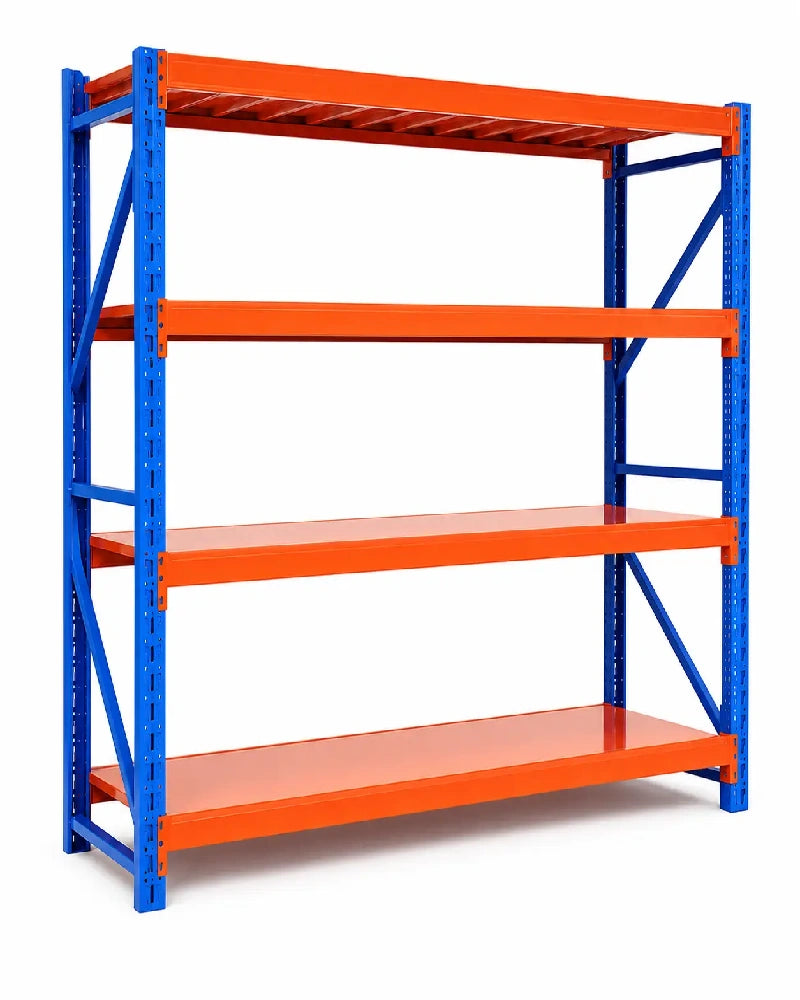


Garage shelves do not all present the same tip-over risk. A low, wide shelving unit on a level concrete floor may feel stable, while a tall, narrow rack loaded with bulky tools can become vulnerable if it is bumped, climbed, unevenly loaded, or installed on a sloped surface.
The safest general approach is to anchor shelving whenever the manufacturer requires it or when the unit could reasonably tip, shift, or be pulled away from the wall. Anchoring deserves particular attention for tall shelving, narrow units, homes with children, garages in earthquake-prone regions, and racks placed near vehicles or active work areas.
The U.S. Consumer Product Safety Commission recommends anchoring furniture with shelves to help prevent tip-over injuries. FEMA also advises fastening tall bookcases and similar storage units to structural support rather than relying only on drywall or plaster. CPSC Anchor It! guidance and FEMA anchoring guidance provide useful background.
However, an anchor does not compensate for an incorrectly assembled rack, damaged components, an unsuitable wall, or excessive loading. Safe garage storage depends on the entire setup.
When Should Garage Shelves Be Anchored?
A freestanding shelf can look stable during everyday use but react differently when force is applied near the top. Pulling a heavy container forward, striking an upright with equipment, or allowing someone to climb the frame changes its center of gravity.
You should strongly consider anchoring garage shelving in the following situations.
The Shelving Is Tall or Relatively Shallow
Height gives a rack more leverage when it begins to tilt. Depth and base width generally improve stability, but dimensions must be considered together.
A tall shelf with limited depth may be easier to tip than a lower unit with a broad footprint. Avoid relying on one universal height-to-depth rule, because frame construction, load placement, connection design, foot shape, and manufacturer requirements also matter.
Before buying, compare:
- Overall height, width, and depth
- Usable shelf depth
- Base or foot configuration
- Available wall-contact or anchor points
- Required clearance around vehicles and doors
- Manufacturer installation instructions
Measure the garage rather than choosing shelving by capacity alone.
Children Can Enter the Garage
Children may pull on shelves or attempt to climb them to reach toys, sports equipment, or tools. Even a shelf that seems difficult for an adult to move may become unstable when its frame is used like a ladder.
CPSC advises securing furniture with shelves to the wall and keeping objects that could attract children away from upper levels. Anchoring is therefore a prudent precaution in garages that children can access, but it should be combined with controlled access and sensible storage.
Keep toys, snacks, sports gear, and colorful containers within safe reach. Do not place attractive objects on the top shelf.
The Garage Is in an Earthquake-Prone Area
Ground movement can shift both the shelving and its contents. Ready.gov recommends securing heavy household items, including bookcases, and placing heavy or breakable objects on lower shelves. Ready.gov earthquake guidance
In seismic regions, ordinary light-duty anti-tip hardware may not be suitable for every rack or load. Follow the shelving manufacturer’s instructions and local requirements. For large, unusually heavy, or custom storage systems, consult a qualified professional about the structure and attachment method.
Anchoring the frame also does not stop loose containers from sliding off. Shelf lips, compatible retainers, closed bins, or other manufacturer-approved restraint methods may be needed.
The Shelving Is Near a Vehicle or Busy Work Zone
A garage is more active than a closet. Vehicles enter and leave, carts are moved, lumber is carried, and long-handled tools can strike uprights.
Anchoring can reduce movement after a minor bump, but it should not be treated as impact protection. Maintain enough clearance for car doors, mirrors, trunks, garage-door tracks, lawn equipment, and normal walking paths. A rack positioned directly in a vehicle’s travel path may need to be relocated.
The Floor Is Uneven or Sloped
Many garage floors slope toward the door or a drain. A rack placed across that slope may lean or fail to distribute its load evenly through all feet.
Use a level to check the shelving from front to back and side to side. Only use leveling components or shims approved for the product and installation. Do not improvise with loose scraps of wood, cardboard, or stacked material.
If the unit rocks before it is loaded, anchoring it to a wall does not correct the underlying floor-contact problem.
The Manufacturer Requires Anchoring
The product manual takes priority over general advice. Some shelving is designed to remain freestanding under specified conditions, while other products include anti-tip hardware or explicitly require wall or floor attachment.
Before purchasing, look for clear answers to these questions:
- Is anchoring required?
- Is the hardware included?
- Which wall or floor materials are supported?
- Where are the approved attachment points?
- Does anchoring affect placement or load instructions?
- Is professional installation recommended?
Do not drill new holes through the frame unless the manufacturer permits it. Unapproved modification may weaken a component or damage its protective coating.
Can Garage Shelves Be Used Without Anchoring?
Some shelving may be designed for freestanding use, but “freestanding” does not mean safe under every condition. The unit still needs to be correctly assembled, placed on a suitable surface, loaded properly, and protected from climbing or impact.
Before leaving shelving unanchored, confirm all of the following:
- The instructions allow freestanding installation.
- The floor is solid, dry, level, and stable.
- Every foot makes firm contact with the floor.
- The unit does not rock, lean, twist, or shift.
- Shelf beams and braces are fully engaged.
- Safety pins or locking components are installed where provided.
- Heavy items are stored on the lower levels.
- The shelving is outside vehicle and equipment paths.
- Children cannot climb or pull on the unit.
- Local rules do not require another attachment method.
If any of these conditions are uncertain, anchoring or professional assessment is the more cautious choice.
How Wall Type Changes the Anchoring Method
The word “wall” does not describe one standard attachment surface. A garage may have drywall over wood studs, drywall over metal framing, concrete block, solid concrete, masonry veneer, or a combination of materials.
Drywall Over Wood Studs
Drywall itself is not the structural support. FEMA’s guidance for tall bookcases states that anchoring screws should penetrate the studs behind the wall; screws placed only in drywall or plaster can pull out.
Use a reliable method to locate the stud and confirm its position before drilling. Electrical cables, plumbing, and other hidden services may be present. Use only fasteners and brackets compatible with the shelf, wall construction, and manufacturer’s directions.
Concrete or Concrete Block
Masonry installation requires the correct drill, fastener type, hole diameter, embedment depth, and placement. Solid concrete and hollow concrete block do not necessarily use the same anchors.
Avoid assuming that a generic plastic wall plug is suitable for a heavily loaded garage rack. If the wall construction is uncertain, or if the shelf will hold substantial weight, ask a qualified installer to identify an appropriate system.
Metal Studs or Finished Garage Walls
Metal framing may require specialized attachment methods. A fastener that works in a wood stud may not provide the same result in thin metal framing.
Finished walls may also conceal insulation, utilities, fire-rated assemblies, or moisture-control layers. Do not select a fastener based only on the visible wall surface.
Rental Garages
Renters should obtain permission before drilling into a wall or floor. Ask the landlord whether approved attachment points already exist and whether repairs will be required when the shelving is removed.
If permanent anchoring is not permitted, choose lower, wider storage designed for freestanding use and reduce upper-level loading. This is a risk-reduction measure, not a direct substitute when the manufacturer requires anchoring.
How to Anchor Shelving More Safely
The exact procedure depends on the shelving and the supporting structure, so always begin with the product manual. The following process helps homeowners avoid common planning mistakes.
1. Assemble and Inspect the Entire Unit
Confirm that the uprights face the correct direction and that beams, decking, braces, connectors, pins, and feet are installed as specified. Do not anchor a partially assembled or visibly distorted rack.
Replace damaged parts rather than attempting to pull a bent frame straight with wall fasteners.
2. Position the Shelving Carefully
Check clearance from:
- Parked vehicles and opening doors
- Garage-door tracks and controls
- Electrical panels and outlets
- Water heaters and other equipment
- Windows, vents, and utility access
- Floor drains and damp foundation areas
- Workbenches and material-handling paths
Leave adequate space to load and unload containers without pulling them at an unsafe angle.
3. Confirm the Supporting Structure
Identify the actual wall material and structural support. Never assume that a screw has reached a stud simply because it feels tight.
Before drilling, check for hidden electrical wiring, plumbing, gas lines, or other services. When the location cannot be verified confidently, use a qualified installer.
4. Use Approved Attachment Points
Attach brackets only where the manufacturer directs. The wall bracket, shelf connection, screws, and structural support work as a system; substituting a random component can create an unknown weak point.
Do not attach shelving to trim, thin wall panels, loose masonry, or drywall alone.
5. Recheck Level and Alignment
Anchoring should hold the shelving in its intended position, not force a leaning unit against the wall. Confirm that the rack remains plumb and that every foot continues to contact the floor.
Tightening one side excessively can twist the frame or lift another foot.
6. Load the Shelves From the Bottom Up
Place dense tools, liquids, hardware, and large containers on the lowest practical levels. Reserve upper levels for lighter, less frequently used items.
Distribute weight across each shelf rather than creating a concentrated load in one corner. Stay within the manufacturer’s stated limits and consider the weight of the containers themselves.
Never climb the shelves. Use a suitable step stool or ladder when accessing upper storage.
Choosing Garage Shelving With Anchoring in Mind
Anchoring should be considered before checkout—not after a loaded rack begins to move.
Look for Clear Installation Instructions
A useful product guide should identify:
- Whether wall or floor anchoring is required
- The intended anchoring locations
- Compatible installation surfaces
- Included and separately required hardware
- Level-floor and clearance requirements
- Load placement guidance
Missing installation information should be clarified with the seller or manufacturer before use.
Choose Dimensions for the Space
Measure wall width, ceiling height, shelf depth, baseboard projection, and vehicle clearance. Remember that the nominal depth may not describe protruding feet or brackets.
Leave room to reach the anchoring points during installation and future inspection. A rack squeezed tightly between walls may be difficult to assemble, level, or maintain correctly.
Match the Shelf to the Stored Items
Make an inventory before choosing a rack. Record the dimensions and approximate loaded weight of tool cases, storage totes, automotive supplies, seasonal decorations, and household equipment.
A shelf should provide enough usable depth for containers to sit securely without hanging over the front edge. Oversized bins can encourage users to pull downward on the frame while removing them.
Maintenance After Anchoring
An anchored rack still needs routine inspection. Check the system after initial loading, after moving heavy items, and whenever the shelf is struck or appears to shift.
Inspect:
- Wall brackets and attachment points
- Loose, missing, or corroded hardware
- Movement between the shelf and wall
- Bent beams, braces, uprights, or decking
- Peeling coating and early corrosion
- Uneven floor contact
- Moisture around the feet or wall
- Containers extending beyond shelf edges
Keep the area dry and clean. If an anchor becomes loose, unload the affected levels and keep people away until the cause has been identified and corrected. Simply installing a larger screw in a damaged hole may not restore a safe connection.
The Bottom Line
Do garage shelves need to be anchored? There is no single rule covering every residential shelf and garage, but anchoring is strongly advisable when shelving is tall, narrow, heavily loaded, accessible to children, exposed to bumps, installed on a questionable surface, or located in an earthquake-prone area. It is mandatory whenever the manufacturer’s instructions or applicable local requirements say so.
Start with a well-designed shelf that fits the space. Assemble it correctly, stabilize it on the floor, use attachment hardware suited to the actual structure, and store heavy items low. Anchoring is an important safety measure, but it works best as part of a complete storage plan.
Frequently Asked Questions
1. Should all garage shelves be anchored to the wall?
Not every shelving product is necessarily designed to require wall anchoring, but securing a unit is a prudent choice when it could tip, shift, or be climbed. Always follow the manufacturer’s instructions and any applicable local requirements.
2. Can I anchor shelving directly to drywall?
Drywall alone is generally not an appropriate structural attachment for tall, loaded shelving. The fastening system usually needs to engage suitable structural support, such as a wood stud, or use a method specifically designed for the identified wall construction.
3. Is a heavy shelving unit stable enough without anchors?
Weight alone does not prevent tipping. Height, depth, load location, floor slope, frame design, and outside forces all affect stability. A heavy unit can still tip if its center of gravity moves beyond its base.
4. Can garage shelving be anchored to the floor instead?
Some shelving systems permit or require floor anchoring, but the slab condition, anchor type, embedment depth, and risk of hidden utilities must be evaluated. Use the product instructions and seek professional help when necessary.
5. Should short garage shelves be anchored?
Short, wide shelves may have less tip-over leverage, but their use conditions still matter. Anchor them if required by the manufacturer or if children, uneven flooring, earthquakes, impacts, or unusual loads create additional risk.
6. Do anchors increase a shelf’s weight capacity?
No. Anchoring does not automatically increase shelf-level or total load capacity. Follow the manufacturer’s published limits and load-distribution instructions. Never add more weight simply because the frame is attached to a wall.
7. What should I do if my anchored shelf starts moving?
Unload the affected shelf levels, restrict access, and inspect the frame, brackets, fasteners, wall material, and floor contact. Do not continue using the rack until the cause is identified and the system is repaired correctly.
Need help choosing?
Find the right storage solution for your space.
Tell us about your room, workspace, quantity, or project requirements and our team will help you compare suitable options.