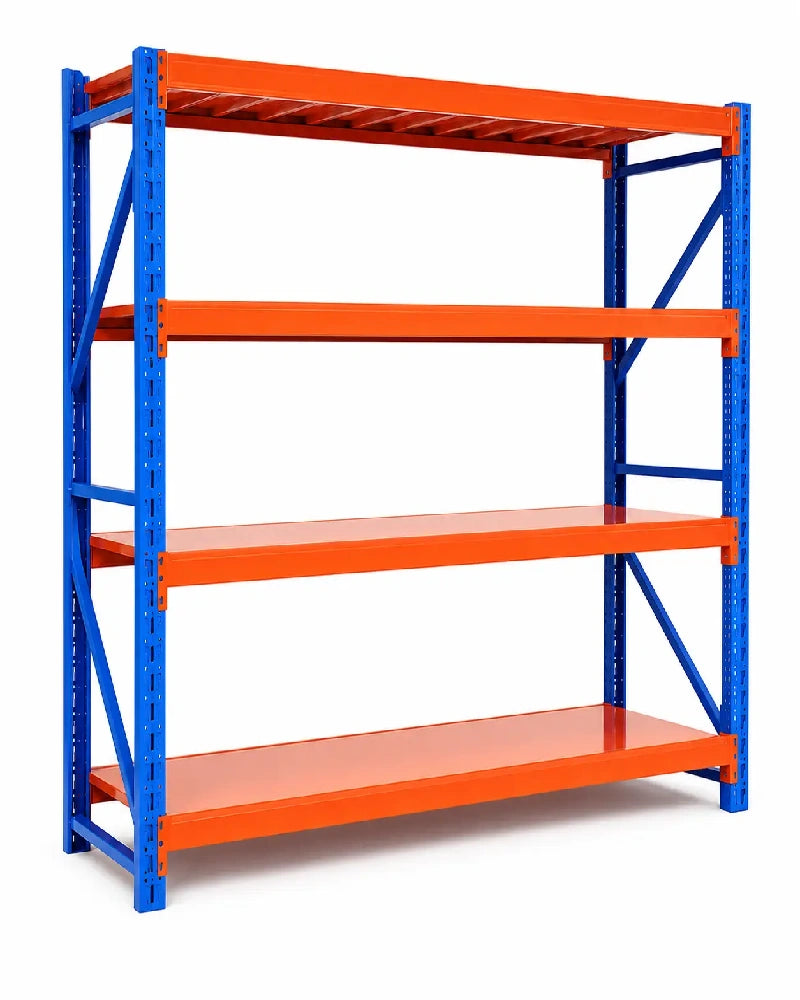


The best garage shelf depth is the shallowest option that fully supports your largest storage container while preserving comfortable access around vehicles, doors, workbenches, and walkways. For many garages, 12-inch shelving suits compact items, 18-inch shelving offers a flexible middle ground, and 24-inch shelving is worth considering for larger totes or bulky equipment—but the right choice depends on your actual containers and layout.
Before choosing a rack, measure the outside depth of the items you plan to store, including lids, handles, wheels, and any overhang. Then mark the proposed shelving footprint on the floor and test the garage in normal use.
12 vs. 18 vs. 24-inch garage shelves at a glance
| Shelf depth | Often works well for | Potential trade-off | Check before buying |
|---|---|---|---|
| 12 inches | Small tool cases, bottles, compact containers, frequently used items | May not fully support larger bins | Item base depth, front overhang, stability, and door clearance |
| 18 inches | Medium totes, household supplies, mixed garage storage | Uses more floor area than a shallow unit | Bin lid and handle clearance, walking route, and vehicle-door swing |
| 24 inches | Large totes, coolers, bulky equipment, deeper storage zones | Can reduce aisle or parking space and make rear items harder to reach | Full footprint, access to the back, garage-door movement, and assembly space |
These are planning examples, not universal fit rules. Container designs vary, and the usable depth of a shelf may differ from its advertised overall dimension. Confirm the exact product drawing and the outside dimensions of your stored items.
When 12-inch-deep garage shelving makes sense
A 12-inch shelf creates a relatively narrow footprint. It can work well where the shelving sits beside a vehicle, near a doorway, behind a work area, or along a wall that must retain a generous passage.
Shallow shelves also make small items easier to see. With only one row of compact containers, you are less likely to bury frequently used supplies behind other objects. That can be useful for hand tools, small parts cases, car-care bottles, gardening supplies, and household refills.
The main limitation is item support. A large tote should not be selected simply because its upper rim appears to fit. Measure the base and check whether the exact shelf supports the container as intended. Avoid relying on excessive overhang, and follow the shelving and container manufacturers' instructions.
Choose 12 inches when
- Your measured containers fit completely on the usable shelf surface.
- Preserving vehicle, door, or walking clearance is a high priority.
- You want one visible row of compact items.
- The location would feel cramped with a deeper footprint.
Why 18-inch garage shelving is a practical middle ground
An 18-inch shelf adds useful storage depth without automatically taking up as much floor area as a 24-inch unit. It often suits mixed household storage: medium totes, tool cases, cleaning supplies, sports gear, and smaller appliances.
This depth can be especially practical when the garage has changing storage needs. A shelf that fits several container sizes may be easier to reorganize across seasons than one optimized for only very small or very large items.
Do not treat 18 inches as a default without measuring. A medium tote may have a tapered base, projecting lid, or handles that change the required space. The rack's frame may also affect usable shelf width and depth. Compare the exact dimensions rather than the number in the product title alone.
Choose 18 inches when
- Your main containers need more support than a 12-inch shelf provides.
- The taped footprint leaves a comfortable route past the shelving.
- You store a mix of medium-size bins and equipment.
- You can reach the full shelf without moving the vehicle or blocking a door.
When a 24-inch-deep garage shelf earns the space
A 24-inch shelf can be useful for large totes, coolers, bulky tool cases, and equipment that genuinely needs a deeper support surface. It may also reduce the need to place containers sideways, which can make labels and handles less accessible.
The trade-off is floor area. An extra six inches compared with an 18-inch shelf can matter beside a parked vehicle, near an interior door, or in a narrow single-car garage. Deep shelving can also encourage two rows of smaller items, which increases storage density but can make the rear row harder to see and retrieve.
Before buying, mark the full 24-inch depth on the floor. Park normally, open the vehicle doors, carry a representative tote through the space, and operate nearby doors or cabinets. Keep clear of moving garage-door components while checking the layout.
Choose 24 inches when
- Your largest containers or equipment require the deeper shelf surface.
- The garage retains practical access after the complete footprint is marked.
- You can reach and remove stored items without unsafe lifting or awkward twisting.
- The shelving will not block outlets, panels, controls, doors, windows, or service areas.
Measure your bins before choosing shelf depth
Container measurements are more reliable than category labels such as “small,” “medium,” or “large.” For each important item, record:
- Outside depth: front to back at the widest point.
- Base depth: the part that will actually rest on the shelf.
- Outside width: include latches, handles, and projecting rims.
- Height: include the lid and anything stored above the rim.
- Access direction: note whether the lid opens in place or the whole bin must be removed.
Also check the shelf's usable surface, not only its overall frame depth. Uprights, braces, lips, and beam positions can change how an item sits. If you are comparing several containers, size the shelf around the largest frequently used item rather than an average.
Test walkway and vehicle clearance with tape
Floor tape turns a product dimension into a real footprint. Mark the proposed shelf width and depth, including projecting feet or posts shown in the product drawing. Then test the room during a normal day.
- Park the vehicle in its usual position.
- Open the doors and hatch that you regularly use.
- Walk between the vehicle and the taped footprint.
- Carry your largest representative tote to and from the storage area.
- Open nearby doors, cabinets, and appliances.
- Confirm that outlets, panels, shutoffs, and controls remain accessible.
- Check overhead tracks, motors, pipes, lights, and the stationary open garage door.
There is no single aisle dimension that works for every garage, user, vehicle, or local requirement. The practical test is whether the space supports normal movement and access without forcing people into moving equipment or blocking required service areas.
Depth affects organization as much as capacity
Deeper is not always more useful. Storage becomes inefficient when small items disappear behind one another or when a heavy tote must be moved to reach a second row.
Use shallow shelves for visibility
Keep frequently used, compact items in a single row. Clear or consistently shaped containers can make inventory easier to scan without adding more depth.
Use medium-depth shelves for mixed storage
Group items by activity—automotive care, gardening, sports, or household supplies—and adjust vertical spacing where the exact product allows it. This uses the full shelf volume without assuming every level needs identical containers.
Use deep shelves for genuinely bulky items
Reserve deeper levels for containers that need the support. If two rows are unavoidable, place lighter or less frequently used items behind the front row and maintain a simple inventory. Keep heavy or awkward items low and follow the exact shelving instructions and load information.
Other dimensions that matter
Shelf depth is only one part of fit. Compare it with:
- Width: the unit must fit between walls, doors, and fixed obstacles.
- Height: allow for tracks, lights, pipes, ceiling storage, and safe access to upper levels.
- Shelf spacing: confirm the tallest bin fits, including its lid and removal path.
- Frame footprint: feet or posts can extend beyond the usable shelf surface.
- Delivery route: check doorways, corners, stairs, and assembly space.
For a broader layout check, use the garage shelving size guide. The garage shelving planning guide covers placement, organization, capacity interpretation, and installation considerations.
Quick decision checklist
- Measure the largest bin's base and outside depth.
- Compare those figures with the exact shelf's usable and overall depth.
- Mark the complete footprint on the garage floor.
- Test parking, vehicle doors, walkways, and access to stored items.
- Keep doors, panels, outlets, controls, and service areas accessible.
- Check width, height, shelf spacing, assembly route, and product instructions.
- Choose the shallowest depth that safely supports your real storage plan.
Frequently asked questions
Is 12 inches deep enough for garage shelves?
It can be enough for compact containers, tool cases, bottles, and small equipment. Measure the item's base and outside depth, then confirm that the exact shelf supports it as intended.
Is 18 inches a good all-purpose garage shelf depth?
It is a useful middle option for many mixed-storage layouts, but it is not universal. Check your bins, the shelf's usable surface, and the taped footprint in your garage.
Do I need 24-inch shelves for large storage totes?
Some large totes benefit from a 24-inch surface, but container dimensions vary. Measure the base, rim, lid, and handles, and compare them with the exact shelf drawing before deciding.
Can storage bins overhang a garage shelf?
Do not assume overhang is acceptable. It can affect support, access, and stability. Follow the shelf and container manufacturers' instructions and choose a surface that supports the item as intended.
Should deeper garage shelving go on the back or side wall?
The best location is the one that preserves vehicle movement, walking routes, doors, utilities, and overhead clearance. Test the full footprint in each candidate position rather than relying on a general wall rule.
How do I compare shelf depth with garage aisle space?
Mark the shelving footprint with painter's tape, park normally, open vehicle doors, and carry a representative bin through the remaining space. Also check any applicable local access requirements.
Choose depth from the items outward
Start with the containers and equipment you actually own, then work outward to the shelf and the garage layout. A 12-inch shelf favors compact storage and floor clearance, an 18-inch shelf balances mixed storage with footprint, and a 24-inch shelf can support larger items when the garage has room. The winning depth is the one that supports your items while keeping the space practical to use.
Once you have measured your bins and tested the footprint, compare the current garage shelving collection. Verify each product's exact dimensions, usable shelf surface, included components, load information, and installation instructions before ordering.
Need help choosing?
Find the right storage solution for your space.
Tell us about your room, workspace, quantity, or project requirements and our team will help you compare suitable options.