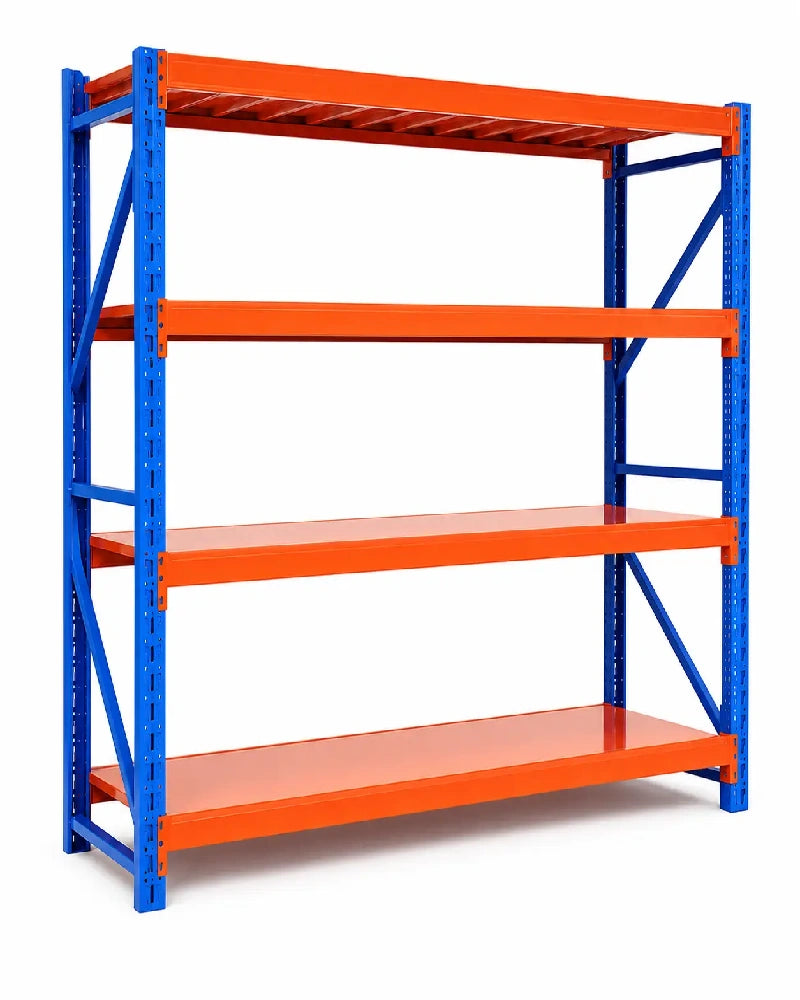


Powder-coated steel shelving combines a steel structure with a dry-applied, heat-cured finish. For buyers, that can mean an even surface, a wide choice of colours and a practical barrier between the steel and everyday indoor contact. But the coating is not proof that a shelf is rust-proof, suitable outdoors, chemically resistant or rated for a particular load.
The right question is not simply, “Is it powder coated?” It is: Which powder system was applied, how was the steel prepared, where is the finished shelf intended to be used, and what care does the manufacturer require? This guide explains the benefits, limits and checks that matter when comparing powder-coated steel shelves for a garage, workshop, storeroom or commercial space.
What is a powder-coated steel shelf?
Powder coating is a finishing process in which finely divided coating material is applied to a prepared metal surface and cured to form a continuous film. The coating system, surface preparation and cure conditions all affect the result. The Powder Coating Institute notes that coating performance depends heavily on substrate cleanliness, pretreatment and proper cure.
That matters because “powder coated” describes a process category, not one universal specification. Different powders are formulated for different appearance, flexibility, chemical exposure and weathering requirements. Two shelves can both carry the same broad finish description while using different steel preparation, film thickness, powder chemistry, edge coverage and quality controls.
The base steel is a separate specification. A powder coat does not reveal the steel grade, thickness or formed profile underneath it. If those details matter to the application, request them independently. Our guide to cold-rolled steel shelving explains why a material-process label alone cannot establish finished shelf performance.
What are the practical benefits?
A continuous, easy-to-inspect finish
When preparation, application and curing are appropriate, powder coating forms a consistent visible surface over accessible metal. That makes routine dust, spills, scratches and chips easier to see than on unfinished steel. A visible finish can also make it simpler to include coating condition in a regular shelf inspection.
Useful resistance to ordinary indoor wear
A suitable coating can help separate the steel from fingerprints, light scuffs and normal indoor moisture. This is useful in garages, workshops and stockrooms where shelving is handled regularly. The level of protection still depends on the exact coating, its coverage and the environment; it should not be converted into an unsupported lifespan or corrosion guarantee.
Colour and finish consistency
Powder systems can produce matte, satin, gloss, textured and other finishes in many colours. Consistent colour can help a storage area look organised and can make damage easier to spot. Appearance is not a structural specification, however, and a glossy or thick-looking surface does not prove better performance.
Low-maintenance routine cleaning
Many powder-coated surfaces can be cleaned with water, a mild neutral detergent and a soft nonabrasive cloth, subject to the shelf and coating manufacturer’s care instructions. This makes day-to-day cleaning straightforward without aggressive tools. Cleaning does not restore lost steel, repair a damaged joint or increase a shelf’s stated capacity.
What powder coating does not prove
| Claim or assumption | What the finish actually tells you | What to verify separately |
|---|---|---|
| “It will not rust” | There is a coating between accessible steel and the environment | Pretreatment, coating type, coverage, damage tolerance and intended environment |
| “It is suitable outdoors” | Nothing about outdoor exposure unless the system is specified for it | Exterior rating, UV and weathering suitability, drainage and maintenance requirements |
| “It is chemical resistant” | No universal compatibility with oils, cleaners, salts, acids or alkalis | Written compatibility for the actual substance, concentration, temperature and contact time |
| “It is heavy duty” | Only the surface finish is identified | Exact-model load rating, load distribution, span, beams, bracing, connections and installation |
| “It is food safe” | No food-contact or hygiene approval | Applicable documentation, local requirements and the intended food-contact condition |
These distinctions are especially important in workplaces. If the shelf will hold hazardous materials, support regulated operations or sit in a corrosive environment, use the product documentation and applicable local rules. Obtain qualified advice where the installation or stored materials require it.
How environment changes the buying decision
Dry indoor rooms
A dry, ventilated indoor room with limited chemical exposure is generally a less demanding setting than an open carport, washdown area or coastal workshop. Even indoors, inspect areas around feet, seams, fasteners and shelf edges because impacts and trapped moisture often start at local points rather than across the whole surface.
Garages and workshops
Garages may experience condensation, wet tools, road salts, vehicle fluids and temperature changes. Workshops may add abrasion, metal filings, oils and cleaning chemicals. Ask what contacts the shelf will actually face instead of relying on the room label. Keep leaks and standing water away from shelf feet and clean spills according to the substance label and the shelf manufacturer’s instructions.
Coastal, humid and outdoor locations
Salt, persistent humidity, UV exposure and repeated wetting can demand a coating system designed and tested for those conditions. A generic indoor powder coat should not be assumed suitable. Ask the supplier to identify the intended service environment and supporting coating specification. Also check whether water can collect in folds, joints, end openings or at floor contact points.
Commercial and chemical exposure
Cleaning agents, process chemicals and stored products may affect coatings differently. Product labels and safety information govern how materials should be stored; the shelf finish does not make incompatible products safe. Use compatible secondary containment where required, and do not treat a powder-coated shelf as a substitute for a purpose-designed chemical-storage system.
How to compare powder-coated shelving before buying
1. Confirm the exact coating description
Ask for the powder type or product specification, colour and finish, intended indoor or outdoor use, and any relevant performance documentation. Broad phrases such as “premium coating” or “industrial finish” are not measurable specifications.
2. Ask how the steel is prepared
Cleaning and pretreatment help the coating adhere and support corrosion performance. Request a clear description of the preparation route instead of assuming that application over bare steel is equivalent to a documented pretreatment system.
3. Check vulnerable areas on a sample
Inspect corners, punched holes, bends, welds, seams, feet and connection points. Look for bare patches, bubbles, sharp edges, heavy runs, cracking or damage from transport. A colour sample can confirm appearance, but it does not demonstrate edge coverage or the condition of an assembled shelf.
4. Separate finish evidence from structural evidence
Record steel grade, thickness, beam and upright profiles, bracing, connectors and finished-model load conditions separately. A coating data sheet cannot validate a shelving load rating, and a load rating cannot establish coating suitability.
5. Match documents to the exact model
Supplier documents should identify the product or coating system they describe. A generic certificate, unrelated laboratory result or photograph from another model is not enough. Keep current assembly, inspection and care instructions for future reference.
Cleaning and care without damaging the finish
- Read the product instructions first. Use the shelving and coating manufacturer’s approved method when available.
- Remove dry dust gently. Use a soft brush, vacuum attachment or clean microfiber cloth so grit is not dragged across the surface.
- Start with the mildest method. Clean water or a mild neutral detergent and a soft cloth are a sensible starting point only when permitted by the instructions.
- Test an inconspicuous area. Check for colour, gloss or texture changes before cleaning a large visible surface.
- Avoid abrasive tools. Steel wool, abrasive pads and harsh polishing compounds can scratch or dull the finish.
- Rinse away residue and dry the surface. Do not leave detergent or pooled water around seams, connections or feet.
- Inspect while cleaning. Note chips, bubbling, exposed steel, staining, corrosion and loose or damaged components.
TIGER Coatings’ published cleaning recommendations for powder-coated surfaces caution against scratching or abrasive agents, strong acids, strong alkaline detergents and cleaners of unknown composition. Those recommendations describe coating care in general; the exact shelf manufacturer’s instructions remain controlling for the product.
For a wider inspection routine covering frames, connections, moisture, decking and load placement, use the garage shelving maintenance guide.
What to do when the coating is chipped or rust appears
A small cosmetic chip and deep corrosion at a load-bearing connection are not the same problem. Unload the affected area before close inspection if there is any question about stability. Look for exposed metal, rust spread beneath the coating, pitting, deformation, cracked welds or damage around holes and joints.
Do not simply cover corrosion with paint, and do not grind, drill, weld or straighten structural parts without an approved procedure. A touch-up system must be compatible with the original finish and the service environment. Contact the manufacturer for repair instructions or replacement parts. If corrosion, impact or deformation may affect a structural component, keep the affected level out of service until it has been assessed.
Choose the finish as part of the whole shelf
Powder coating can be a practical finish for steel shelving, especially when the system is matched to the environment and maintained correctly. Its value is clearest when the supplier also identifies the base material, component design, finished-model rating, use conditions and care requirements.
Browse Heavy-Duty Shelving to compare available configurations. Before purchase, verify the current product page and instructions for the exact model, including dimensions, included parts, load conditions, finish and intended environment.
Frequently asked questions
Is powder-coated steel shelving rust-proof?
No. A coating can reduce direct exposure of the steel, but corrosion performance depends on preparation, coating type, coverage, damage and the service environment. Inspect chips and exposed areas promptly.
Can powder-coated shelves be used outdoors?
Only when the exact coating system and finished shelf are specified for the intended outdoor conditions. Do not infer exterior suitability from the words “powder coated.”
What should I use to clean powder-coated shelves?
Follow the product instructions. Where permitted, start with water or a mild neutral detergent and a soft nonabrasive cloth, test a hidden area, rinse residue and dry the surface.
Can I use disinfectant or degreaser on the coating?
Not without checking compatibility. Formulations and contact times vary. Ask the shelf or coating supplier about the exact cleaner and test it as directed.
Does powder coating increase shelf capacity?
No. Capacity depends on the complete shelf design, materials, geometry, connections, assembly and loading conditions. Use the rating for the exact finished model.
Can a chipped coating be touched up?
Possibly, but use only a compatible, manufacturer-approved repair method. First determine whether the damage is cosmetic or accompanied by corrosion or structural damage.
Is a thicker-looking coating always better?
No. Appearance does not establish film thickness, adhesion, cure or suitability. Use documented specifications and inspection evidence rather than visual thickness alone.
Need help choosing?
Find the right storage solution for your space.
Tell us about your room, workspace, quantity, or project requirements and our team will help you compare suitable options.