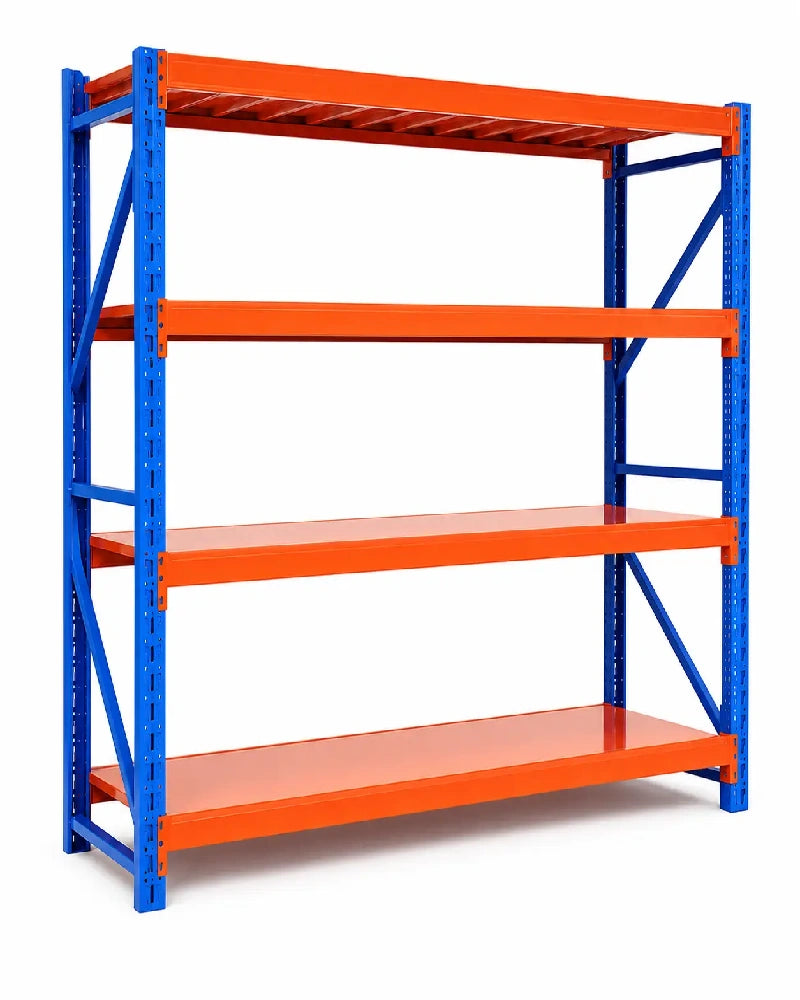


Before buying freestanding garage shelves, check whether the complete unit fits your space, whether its frame and shelf decking suit what you plan to store, whether the feet can sit securely on your floor, and whether the shelf positions can be adjusted around your items. Do not choose from a capacity headline alone: confirm the manufacturer’s load conditions, assembly requirements, anchoring instructions and included parts for the exact model.
This checklist works for garages in both Australia and the United States. Measure in millimetres and metres or inches and feet—whichever matches the product listing—but keep every measurement in one consistent system while comparing models.
Start with the space, not the shelf listing
A freestanding unit still needs a defined footprint. Measure the usable wall width, the maximum height below tracks, openers, pipes or ceiling storage, and the depth available without narrowing the path used by people, vehicles, bins or tools. Include skirting boards, wall steps and floor slopes that may prevent the frame from sitting where you expect.
Then test the proposed footprint with removable painter’s tape. Open the vehicle doors, move the largest storage tub through the walkway and operate the garage door. This simple test reveals conflicts that a room measurement alone can miss. For a more detailed process, use our garage measuring guide.
Record the dimensions that affect everyday use
- Overall width: the outside edge of one upright to the other, not just the usable shelf surface.
- Overall depth: include feet, braces and any part that extends beyond the deck.
- Overall height: allow for assembly, top-shelf access and overhead obstacles.
- Clear shelf opening: the space between beams and uprights that your bins must pass through.
- Usable shelf depth: confirm that containers can sit fully supported without protruding into the aisle.
Inspect the frame and connection system
The frame is more than the visible uprights. Look at how the horizontal beams connect to them, how the front and back remain square, and whether braces or locking pieces are required. Product photos should show enough detail to understand the connection method. If the listing hides the joints or does not provide assembly instructions, ask for that information before ordering.
Check whether the unit is boltless, bolted or uses another connector, then consider the tools and access needed for assembly. “Tool-free” should not be assumed from appearance. Some systems still require a mallet, fasteners, wall hardware or a second person, and those requirements should come from the exact product instructions.
Also check how the finish and material are described. A metal frame, timber-based deck and wire deck behave differently in a garage. Match the materials to your environment, including humidity, dust and the possibility of occasional splashes, but do not assume that a finish is corrosion-resistant or that a deck is suitable for damp conditions unless the manufacturer says so.
Check the shelf decking, not just the frame
The deck is the surface that directly supports your storage. Confirm what it is made from, how it sits inside or on top of the beams, and whether support bars are included beneath it. A deck should lie flat and be fully seated according to the instructions. Photos that show only filled shelves may make these details hard to judge.

Think about the base of the items you will store. Small bottles can be awkward on widely spaced wire, while a large rigid tub needs a surface deep enough to support it properly. If you plan to use trays, liners or replacement decks, verify compatibility rather than assuming any accessory will fit.
Examine the feet, floor contact and stability instructions
Garage floors are not always perfectly level. Look for clear images or drawings of the feet and confirm whether levelling parts, floor protectors or anchoring hardware are included, optional or unavailable. Do not improvise shims, drill into the floor or alter the frame unless the product instructions allow it.
Freestanding does not automatically mean “never anchor.” The correct setup depends on the exact unit, its instructions, the floor and wall construction, the loading pattern and local requirements. Follow the supplied labels and manual. If anchoring is required or the installation involves uncertain wall, slab, electrical or garage-door conditions, use suitable hardware and obtain advice from a qualified professional.
After assembly, the unit should sit where every foot can make the intended contact and where it cannot block a doorway, electrical equipment or moving garage-door parts. Recheck the frame after placing it in its final position rather than assuming a unit assembled elsewhere will remain level after it is moved.
Decide how much adjustment you actually need
Adjustable shelves are useful only when their adjustment range matches your storage. List the height of your tallest tubs, tool cases and frequently used items. Then check the available shelf positions and remember that beams and decking consume part of the vertical opening.
Ask four practical questions:
- Can the shelves be repositioned after the unit is assembled?
- Does moving one level require partially dismantling the frame?
- Are all planned positions permitted by the instructions?
- Will the revised layout still leave useful space at the top and bottom?
If you are still deciding between wall-supported storage and a floor-standing unit, compare the installation and access trade-offs in our guide to wall-mounted versus freestanding shelves.
Read load ratings with their conditions
A load figure is meaningful only with its stated conditions. Verify whether the number applies to each shelf or the complete unit, whether it assumes an evenly distributed load, and whether it requires a specific shelf layout, support bars or anchoring method. Confirm the rating in the manufacturer’s current instructions for the exact model; do not transfer a figure from a similar-looking shelf.
Plan storage by item, not by guesswork. Place denser items low, keep each item within the shelf edges, and avoid point loads unless the instructions permit them. Never climb the unit or use it as a ladder. If you cannot verify the weight of an item or the conditions behind a rating, choose a more conservative arrangement and get product-specific guidance.
Check the buying details before checkout
A strong shortlist can still fail if the listing is incomplete. Before ordering, confirm the exact model and review:
- assembled outer dimensions and usable shelf dimensions;
- frame, decking and finish materials;
- number of shelf levels and permitted adjustment positions;
- stated load rating and all conditions attached to it;
- included beams, braces, support bars, feet, fasteners and anchoring components;
- tools, number of installers and assembly sequence in the current manual;
- package dimensions and weight if you must move it through doors or stairs;
- product-specific shipping, returns and replacement-part information.
Use the same checklist for every candidate. That makes it easier to compare what is verified instead of being influenced by different photography, naming or promotional claims.
For a broader view of how size, strength and room layout work together, read the garage shelving guide before finalising your shortlist.
A quick pass/fail checklist
- Pass: the complete footprint fits and has been tested against real movement paths.
- Pass: the frame connections, deck supports and included parts are clearly documented.
- Pass: the feet can contact the intended floor as the instructions require.
- Pass: shelf openings fit your measured containers after allowing for beams and decking.
- Pass: the load rating is tied to the exact model and its stated conditions.
- Pause: dimensions, materials, included parts or installation requirements are missing.
- Reject: the unit would obstruct a door, vehicle path, electrical access or garage-door mechanism.
Frequently asked questions
Are freestanding garage shelves suitable for uneven floors?
Only if the exact product and installation instructions accommodate the floor condition. Check the foot design and any approved levelling method. Do not improvise packing or modify the frame without manufacturer guidance.
Do freestanding shelves need to be anchored?
Some do. Follow the manual and labels for the exact model, along with applicable local requirements. “Freestanding” describes the shelf type, not a universal exemption from anchoring.
Is a per-shelf capacity the same as the total unit capacity?
No assumption should be made. The manufacturer may specify separate limits and conditions. Verify whether figures apply per level or to the whole unit and whether evenly distributed loading is required.
Which is better: wire or solid shelf decking?
Neither is universally better. Choose according to the base and size of your stored items, the garage environment, cleaning needs and the product’s documented use conditions.
How deep should freestanding garage shelves be?
Deep enough to support your measured containers without creating a conflict with vehicle doors or walkways. Test the complete outer depth on the floor before buying rather than choosing a standard depth by habit.
Can I change shelf heights later?
That depends on the connection system and assembly instructions. Confirm the allowed positions and whether adjustment requires unloading or partially dismantling the unit.
What should I do if product specifications are incomplete?
Ask the seller or manufacturer for the current manual, assembled dimensions, materials, included-parts list and model-specific load conditions. Do not fill gaps by borrowing details from a similar product.
Choose from verified details
The best freestanding garage shelf is the one whose dimensions, construction, adjustment and installation requirements match your measured space and storage plan. When you are ready to compare current options, browse the RockShelfIt garage shelving collection and verify the details on the exact product page before ordering.
Need help choosing?
Find the right storage solution for your space.
Tell us about your room, workspace, quantity, or project requirements and our team will help you compare suitable options.